
Prompt Deez Nuts
AI can make a song, but it can’t make a scene.

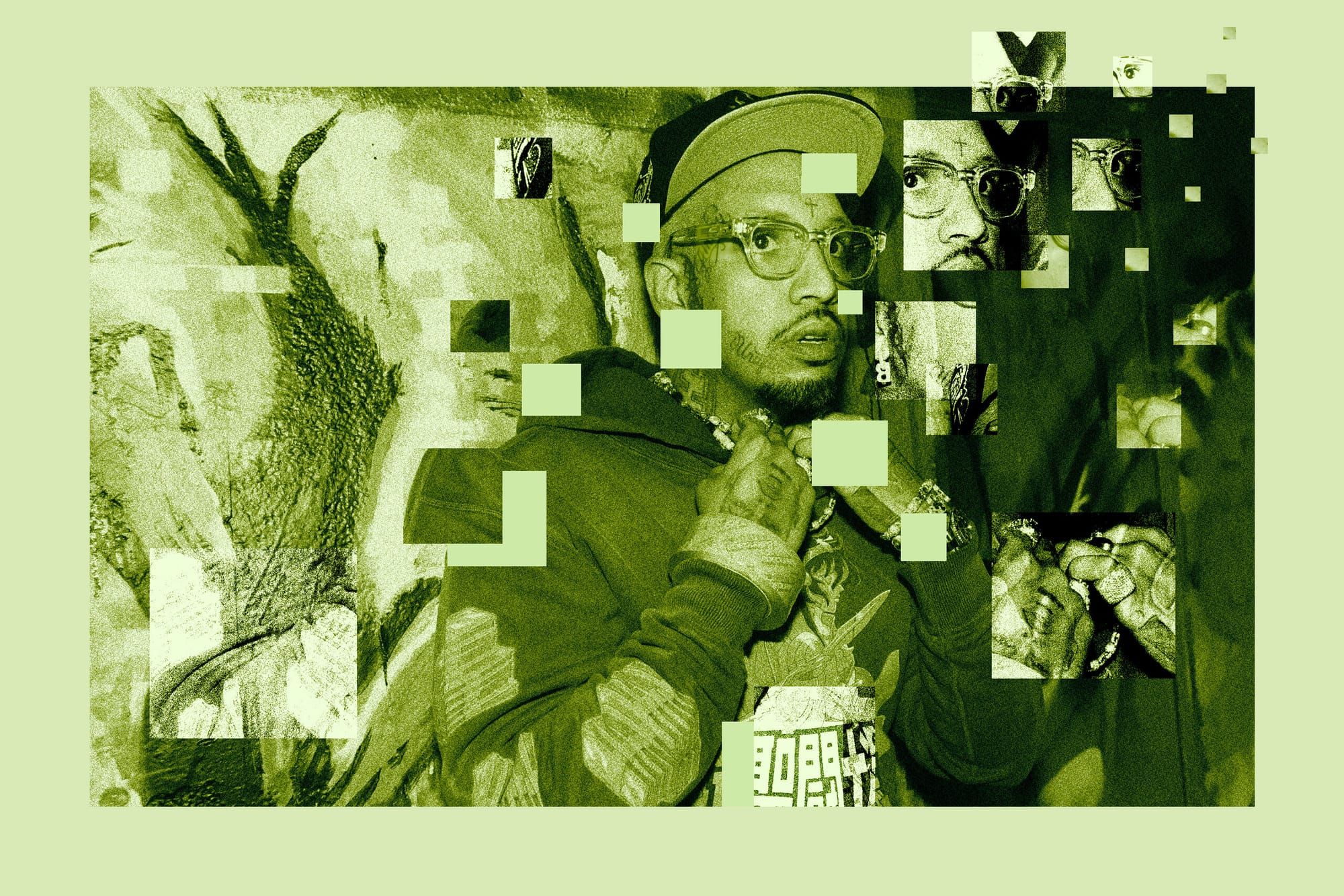
We’ve seen Drake barking like a dog to a goth girl calling him a “good boy,” and Fenix Flexin and Tyga denying—then capitulating and defending—AI slop, all within the span of a couple weeks. The rash of inauthenticity in mainstream hip-hop culture has officially advanced to a straight up herpes sore. We are here because the big three record labels replaced traditional A&R and artist development operations with social media scouting. Find a look, find a metric, then monetize until the moment passes. Of course Artificial Intelligence was able to step in as the logical endpoint of an industry already groomed to value scalable content over artists discovering what they actually have to say.
Earlier this summer, Cali artist Fenix Flexin imposed his single “Rubberz” upon us. Its ‘80s pop production and playful Bowie-esque cadences impressed a lot of people with their originality, but the track just didn’t sit right with the online producer community. The vocals sounded disjointed and glitchy in a way that casual listeners could dismiss as editing. After weeks of exhausting comment section debates–during which Fenix posted Pro Tools sessions as proof of his genuine artistry–Medasin, a well-known producer, blew the lid off of the charade, alleging that Fenix and Purps On the Beat generated the entire song with AI. Using the suspected platform, Treblo, he reproduced its phrases, textures, and even its strange vocal tendencies. The platform’s own detection tool classified “Rubberz” as very likely made with its own model. Fenix, after initially denying AI involvement, eventually pivoted to defending it as another music-making tool.
The scrutiny soon led a trail to the spokesman of hip-hop inauthenticity (and normalized hebephilia), Tyga, and his not-very-anticipated album “$TARFACE.” Tyga wasted no time admitting his use of AI and defending it by saying, “it’s no different than when AutoTune came out.” Pitchfork responded with a rare 0.0 rating, calling the album “smug and complacent and depressing.” Doja Cat was more concise with her critique: “Tyga is a penis for making an AI album.” Somehow, in 2026, Tyga made Pitchfork look like a bastion of good takes on hip-hop culture?
As much as I like dunking on Tyga and watching a jackass like Fenix Flexin ruin his career right as it starts, the question has to be asked: how the hell do we stop AI from invading the sacred space of human expression through art? The answer isn’t going to come from the same industry that created the conditions for this. It will come from independent music scenes like ours in the Carolinas. Local scenes live and die by not just authenticity, but more importantly accountability. You have to show up, perform, collaborate, sell merch, talk to listeners, and return to the same rooms. People know who produced the record, who can reproduce it live, whether the artist matches the artistic statement.
Artists and contributors in an independent scene are like small-business owners. Every listener and genuine relationship matters. That pressure can be unforgiving, but it also breeds originality. I’ve seen very talented people fall flat out here because their work felt aimed at fame rather than rooted in anything real. My optimistic take doesn’t count on AI music remaining horrible; it will only improve. What it can’t manufacture, though, is the lived relationship between an artist and a community, and that is where the culture will continue to grow and create new movements that will be impossible to ignore. My optimistic take depends on what I see when I look into the audience from behind my decks with Joose.
AI could never reproduce a crowd moshing and screaming the lyrics to “Oh Yeah” when I mute it out.

Charles Morse is a Raleigh and NYC-based writer and DJ with a background in music journalism and radio. He writes about Hip-Hop culture, gaming, and regional music scenes. He can be reached at charlesmorsepr@gmail.com and @hazrdpay on Instagram.