
The Fall-Off Needs To Be Bigger Than J. Cole
Hoping that a legend recognizes the limitations of competitiveness and the rap canon as artistic material; plus Sonny Miles, Lord Fess, and more from our Tuesday Mixtape.

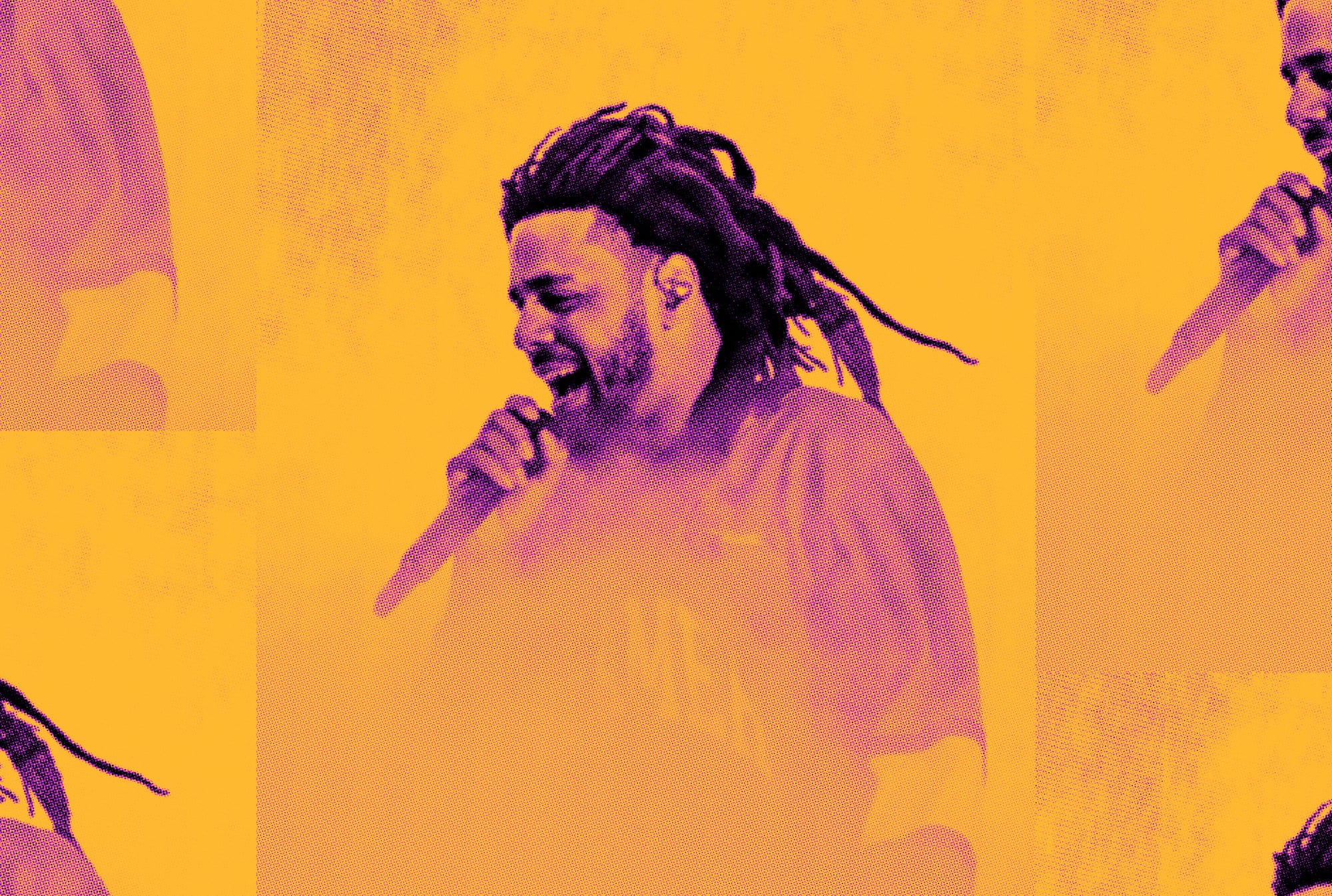
The date has been announced. The limited edition vinyls are being pressed. The Fall-Off, the long-teased, heavily hyped swan song from Fayetteville native J. Cole has taken its final form, and nothing said about it at this point—even on a platform with the tectonic reverberations of Super Empty—can make any difference. It is what it's gonna be, and only Jermaine himself, and a few dozen to few hundred other people who've been legally sworn to secrecy, know what that means.
Still, with nearly three weeks to go before it arrives, we must do something with ourselves. And so, after we have waded through the 17,000 posts on social media breaking down the obvious "hidden" meaning of the 2-6-26 release date, we turn to the wellspring that has for generations sustained sports radio through the doldrums of off-seasons, lockouts and other interregnums: idle speculation and wish fulfillment. Which in today's case, means elaborating on the particular fears I have around this blockbuster release, and the creative pitfalls I could see it succumbing to—tendencies that date back to the early days of the rapper's career.
You may remember that Cole's emergence in the late aughts came with an obvious motif: in the cover art for his second and third mixtapes, The Warm-Up and Friday Night Lights, and his debut album, Cole World: The Sideline Story, he is either holding a basketball, sitting with one, or in a locker room where they are presumably nearby. Besides letting you know that Jermaine is a regular Basketball Jones, this imagery is intended as a metaphor for the wins and losses and emotional ups and downs that aren't just the stuff of hoop dreams, but the brutal and unforgiving rap game as well. Many a professional rap critic chided the approach as try-hard and unoriginal (Hip-hop and basketball? Whoa!); myself and millions of other (mostly young) people didn't mind in the least. We were all in.


Maybe on the advice of a wise friend or maybe because everyone has a limit somewhere, J. Cole eventually stopped basing his album names and covers on basketball. (For a time, at least: In 2021 he released The Off-Season, with yet another hoop in the background, paired with a three-game stint as a pro player in the Basketball Africa League, and preceded by a signature line of Puma sneakers.) But roundball is just one vector of the competitive, legacy-cementing ethos that's undergirded Cole's career, one whose artistry has been equal parts fueled and marred by an obsession with the rap canon, and his self-styled Homeric journey to the top of it. It should come as little surprise that nearly 20 years in, a number of Cole's most high-profile episodes, from "Let Nas Down" in 2013, to the "Big 3" debacle in 2024, have been moments of being in conversation with other rappers about rap. On the surprise 2024 mixtape Might Delete Later—even if we artfully sidestep what happened with "7 Minute Drill"—being the best in the game is a thematic constant, appearing in some form or another on nearly every song ("pop in a new one and let off again, always knew we was gon' get our revenge/ Aim at whoever ain't dead, I will win;" and "Yes sir, it's me, not two not three/ The uno, G-O-A-T," and so on).
None of these choices, to be clear, are objectively bad. In fact they can often form the basis of rap music that is eminently listenable and fun, as J. Cole's has consistently been for most of my adult life. I don't bring up all the above to suggest that The Off-Season isn't good, or "Trae The Truth In Ibiza" isn't amazing, but to say, in an otherwise outstanding career that has nonetheless frequently walked up to, if not fully crossed over, the line into self-mythologizing legacy talk and rap calisthenics for the sake of it, my biggest fears for The Fall-Off are the obvious ones. That Cole's career and experiences are mined more for the way they complete a clean, long-telegraphed story arc about himself and "the game" than for the greater universal truths contained therein; that the project's landscape is more like the placeless, nebulous ether of Might Delete Later and Off-Season than the ambitious and distinct worlds of 2014 Forest Hills Drive, 4 Your Eyez Only, and KOD.
Though its very name—directly mirroring his 2007 debut, The Come-Up—all but promises a story with J. Cole and his rap life at its center, the way that concept is applied hardly has to be navel-gazing and narrow. In the album's teaser video, comedian Dan Harumi takes the idea of "falling off" to a higher plane than the internecine squabbles of a few wealthy rappers: "Everything goes away eventually... Of course it's not going to last forever, because somebody else has to take that spot." A truly authentic sentiment because of its origins (the clip was borrowed from a video Harumi uploaded to YouTube almost a year ago, not commissioned specifically for the rollout), it symbolizes the best of what The Fall-Off can be: an album concerned less with rap status than the cyclical nature of rising and falling, of prominence and anonymity, of what success really means. One song in, the skills are (as always) obvious, but which path the project will take overall remains unclear.
As a rap listener, as a longtime fan, as a North Carolinian, I want The Fall-Off to be the magnum opus that it plainly aspires to be. At this point in his career, there's not the slightest remaining doubt about Cole's technical ability, from unforgettable freestyles and loosies to a catalog full of searing music that also, as if for good measure, often seems to be on or about fire (a flame that The Fall-Off is apparently keeping lit). For this final act, we don't need more flames—or at least, not flames for their own sake. We need a journey we've never been on, a body of work informed by, rather than in service of, its author's storied career. "Dropping Reasonable Doubt last" would be quite the send-off. But as far as Jay-Z parallels go, the better blueprint would be 4:44.


Also This Week On The Tuesday Mixtape:
What's the Tuesday Mixtape, you ask? It's a new thing I just made up, for the purposes of sharing new NC music from the week prior (or even earlier, if we missed it). It was originally called New Music Monday, but then it didn't go out yesterday, so now it's called this. There's a lot to catch up on, not only from the past week but over the holidays too, so I'll get right into it:
ALBUMS
Early Sonny, by Sonny Miles
For those pining for more Sonny after the dizzying highs of 2024's Gamma, avail yourselves of this veritable treasure trove of demos, rough cuts and other loose ends that the Winstonian singer dropped off on the second day of this year, called Early Sonny. Some tracks begin and end like traditional songs; others are more mercurial, abruptly cut off by bits of studio dialogue one moment, flowing into a totally different riff the next. It's good sonic company anyway—especially standout tracks "Bedroom Hollywood" and "Waisum Time"—and hopefully enough to hold us over to the next, fully formed, release.