
Lute Reaches Back Out
Born out of grief, then marred by it again before release, the Dreamville artist's first album in five years is a testament to resilience, and a reflection on keeping the world at arm's length.

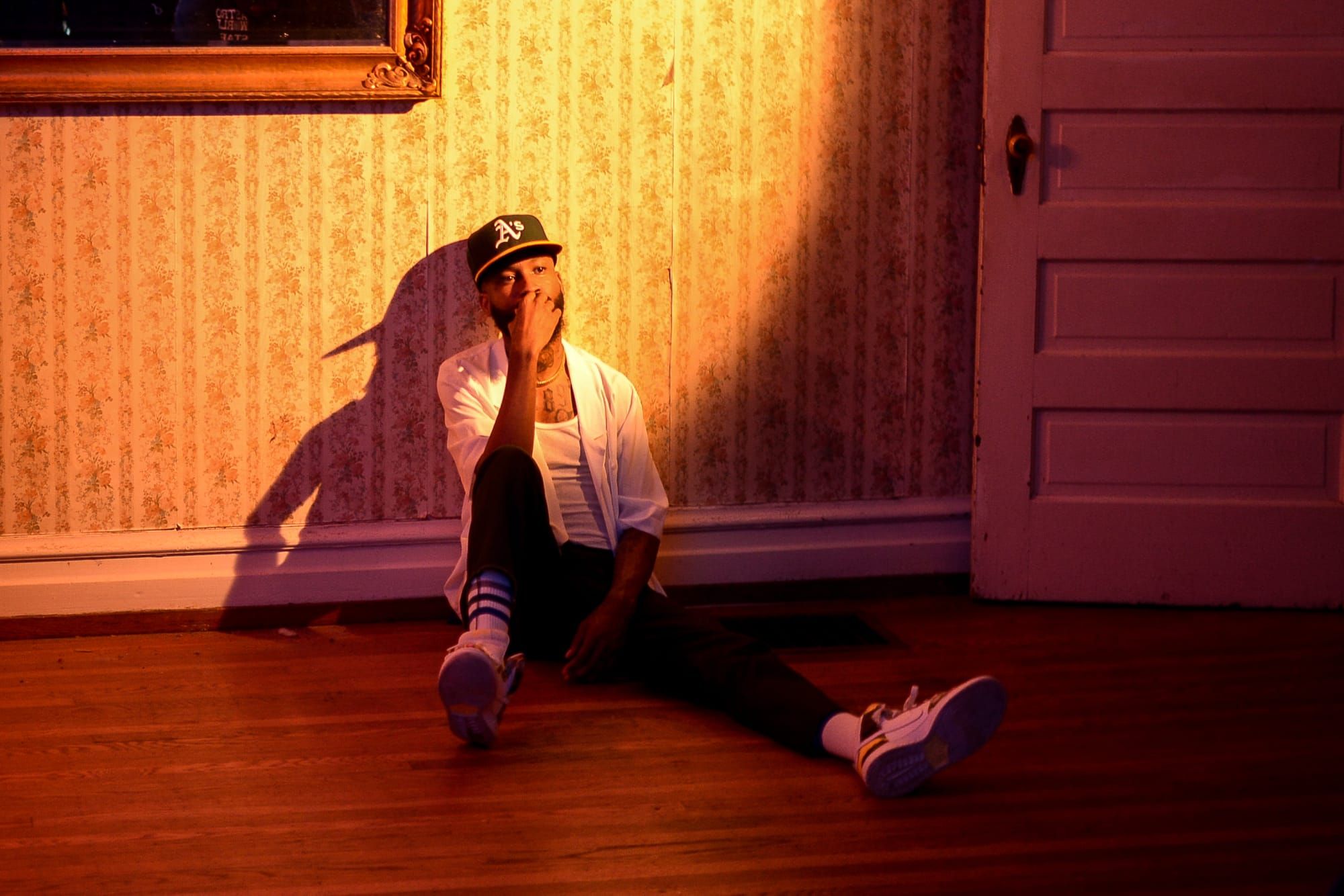
Update: On July 6th, Hard To Reach was made available on major streaming platforms. You can listen on Apple and Spotify now.
By now, most fans of Lute have learned to accept that waiting is just part of the deal.
In the fourteen years since his breakout 2012 mixtape, West1996, the Charlotte rapper has released just two other full-length projects (the 2017 sequel West1996 Pt. 2, and his 2021 studio album debut, Gold Mouf), a pace less aligned with modern rap conventions than it is with leap years, World Cups, and presidential elections. And yet, combined with the consistent depth and quality of his work, the cadence has made Lute (born Luther Nicholson) one of those rare artists whose deliberate, slow approach becomes its own kind of appeal—the simple refusal to produce work at anyone else's pace only bolstering the perceived authenticity of the person behind it.
"The way that I write, [music] is like a journal for me," he says, when we talk via video call earlier this month. "Most of the time I'm just living my life, and I go in a studio every now and then to log the things that I'm going through... If I'm not feeling inspired, if I don't have anything worth talking about, I'm not in the studio."
If that sounds like a sensible and well-adjusted approach to art-making, it's also one that, as the time between albums drags on, engenders no small number of patient(ish) questions from fans about when new material is on the way. Lute is aware. He's seen the comments, written about them in his own lyrics ("Can't post a picture of my daughter without that 'When you droppin?' comment"). He's also aware of the barriers he's erected between himself and the world in recent years, not just as insulation from the constant, anxiety-inducing accessibility imposed by smartphones and social media, but also as a coping mechanism from grief, depression, and loss. Both meanings are woven into the title and contents of Hard To Reach, his characteristically self-assured new EP (and first extended release in five years), which finds its author striking a tone of optimism even while instinctively keeping the world at arm's length.
Rich, descriptive renderings abound across HTR's seven tracks, but few are starker than one scene from the EP's single, "Authentic": "It was me, God, a couple YouTube beats, and a pen..." It's a humble image coming from a Platinum-selling, major label artist, and a sobering distillation of the album's origins: an emotionally isolated person trying to rekindle their love for music, and regain a sense of stability, in the wake of compounding tragedy.
The official music video for "Authentic," directed by Wyeth Collins.
There was plenty to be proud of after Lute's 2021 studio debut, but he was hardly in the mood to celebrate—starting that fall, he would lose his father, grandmother, and a cousin all in the span of just over a year. Grief consumed him, blotting out any motivation for creating. ("I had no interest in music after Gold Mouf," he says.) Years passed before he returned consistently to the studio, and only then with the steady encouragement and counsel of close friends Rich [Bartell] and Will (of production duo The Nukez) and his therapist, Dr. Victor Kidd. "They [got me] back to the space that I'm in, both to create, and just as a man in general... They really played a big role in my life." Music started to be fun again, and with the Nukez on production, HTR began to take shape.
Then, with the album completed, a crushing sequence of Déjà Vu: the deaths of Dr. Kidd in December (after being critically injured by a drunk driver), and then Bartell, just weeks later, in January. It's a one-two punch so nearly identical to his previous loss that when Lute first starts talking about it on our call, I think he's mistaken my question for being about his father and grandmother in 2021. He confirms that these are in fact two distinct instances of almost the same trauma playing out in his life, five years apart. "Every time, it just takes the wind out of your sails," he says.

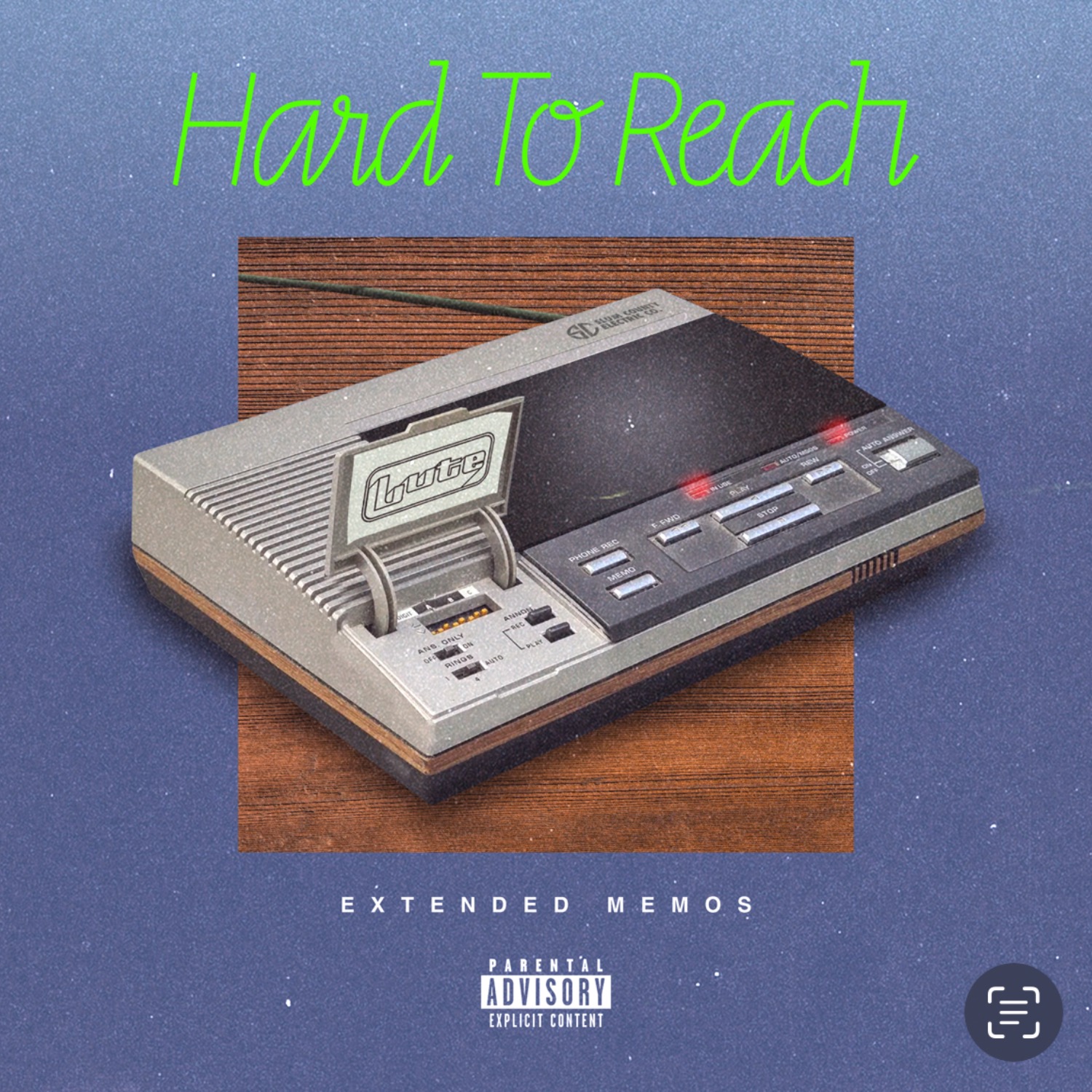
While the losses of Kidd and Bartell aren't addressed on HTR, it can feel as though they are, given the undercurrents of grief and self-isolation that informed the album in the first place—albeit based on a different situation, years before. Reflecting on those themes and the seclusion he had to come back from, Lute says: "I got in spaces where two days turn into fucking two weeks and then two weeks turn two months and then next thing you know, it's a whole year gone by and I'm just not paying attention to things."
In conversation, the 36-year-old is warm and engaging—his face lighting up at a moment's notice, his speech often quickening into a flurry of impassioned, staccato bursts. He answers questions freely and vulnerably, as unreserved talking about the crucible of the past few years as he is about his early-career pursuits in graphic design. And though I bring it up multiple times throughout our call, he waves off any concerns with the clock and assures me that he's in no rush. At least for the hour I'm speaking with him, he's not the distant, socially anxious recluse that a title like Hard To Reach conveys—he's the polar opposite.
The truth, of course, lies somewhere in between. And it's in capturing that balance that HTR shines—its pain never far from the surface, but muted and moderated by an unmistakable, hard-won sense of contentment. It's there from the opener, "Back Where I Started," a sepia-toned career retrospective so relaxed that at times, its protagonist's voice drops to a near-whisper. It's in the steely resolve of "Where's Da Music?" ("my circle smaller than most/ I had to burn some bridges and cut the ends of my coat/ I had to stitch up some loose ends for all those days I went ghost") and the steady self-encouragement of "Ballad of Westside Scoop" ("Who gives a fuck about who at the top? I don't do this shit for no muhfuckin cred/ How many times I gotta tell you I'm me? Don't let this internet get to your head").
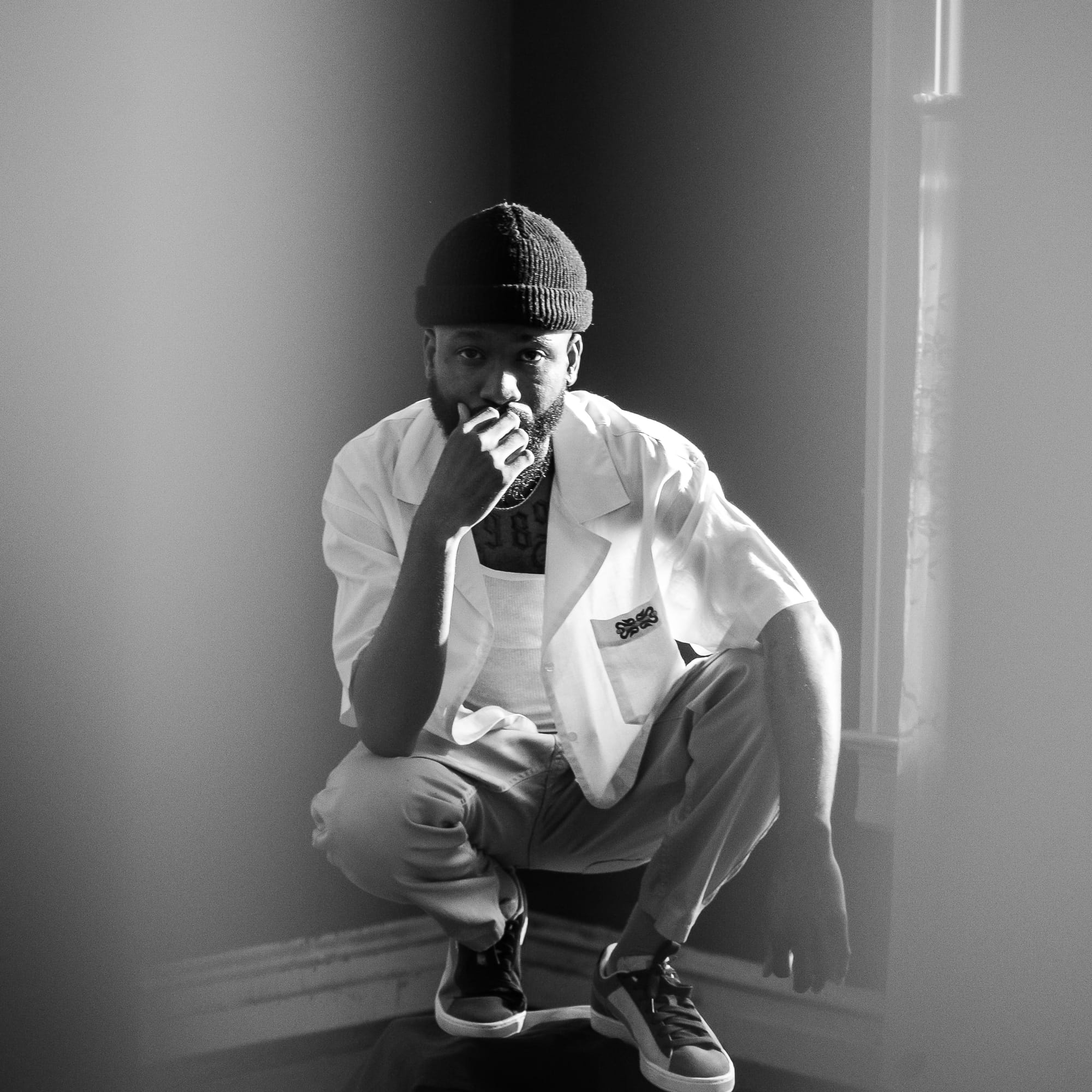
Like mentor Rapper Big Pooh before him, Lute has a singular gift for plainspoken, universal writing that dispenses with technical intricacy and acrobatics and cuts straight to the heart instead. (The various labels assigned to this style are no longer among his concerns: "I'm cool with whatever it is. If it's a 'conscious' rap, if it's 'blue-collar'—I make music for the day-to-day person.") On HTR, that grounded, real-life sensibility is the perfect vessel for processing the many things, beyond just loss, that collectively made him turn inward—including anxiety, imposter syndrome, and an age of constant, nonstop engagement.
When we talk about the latter, he marvels at streamers, the modern entertainers most associated with having shrunk the gap between their private and public lives as close to zero as possible. "I can't just be letting everybody into my bubble," he says, before recounting a period of time during the pandemic when people in his life encouraged him to use his painting hobby for short-form content. "I was like, 'Nah, I don't want to do content with my painting because my painting's for me'... if I'm showing everything, what do I have left for myself?"
Humble musings like these lend Lute's music much of its quiet power, but can also lead one to temporarily forget who he is—an artist who has performed on stages for tens of thousands, seen his name on the Billboard Hot 100, traveled the world, and worked with legends and heroes alike. This, too, is something he's still processing, both in life and on HTR. "I definitely had imposter syndrome," he says. "The Rolling Louds, the Platinum plaques, going to the GRAMMYs... There were times I was like, 'What am I doing here? How did I get here?' Now... I can kind of see what everybody else is seeing, and I'm able to embrace who I am to folks."
Lute appears alongside DaBaby and J. Cole (and Kendrick Lamar) on the 2019 single "Under The Sun," which peaked at No. 44 on the Billboard Hot 100.
As much space for processing and growth as the distance has allowed, it hasn't always been a conscious choice. Inseparable from the ethos of Hard To Reach is the social anxiety with which Lute has struggled, particularly since the pandemic—turning things like the notification pings of social media into a mental minefield ("texts, DMs, any kind of alert sets my anxiety off really bad"), and at times, even forcing him to turn IG posting duties over to members of his inner circle entirely.
"To me [anxiety] is like we're crossing a bridge," he says. "You go across to the bridge and I'm still stuck on the other side, and you're like, 'Yo, why aren't you coming across the bridge? I made it across, it's so easy!' But in my mind there's no middle part in that bridge."
And yet, however improbably, he's made it to this moment: his first project in five years, already being well-received by fans (a relief, he admits, after so much time away), and dates set for a first-ever European headlining tour this fall. In the continued spirit of ducking industry norms, he's released the album exclusively through the platform Engineears—spurning the big streamers, and requiring a minimum purchase of $9.96 to listen. It's a move that Lute's resumé has more than earned, but one that's still a tough sell in 2026.
Under social media posts announcing the unorthodox release, some commenters balked at the prospect of an entry fee to listen to new music by one of their favorite artists. “Spotify???” “Apple Music users are suffering right now, when are we getting the album?” and so on.
Unsurprisingly, he has yet to reply.

🌐 ALSO THIS WEEK(ISH):
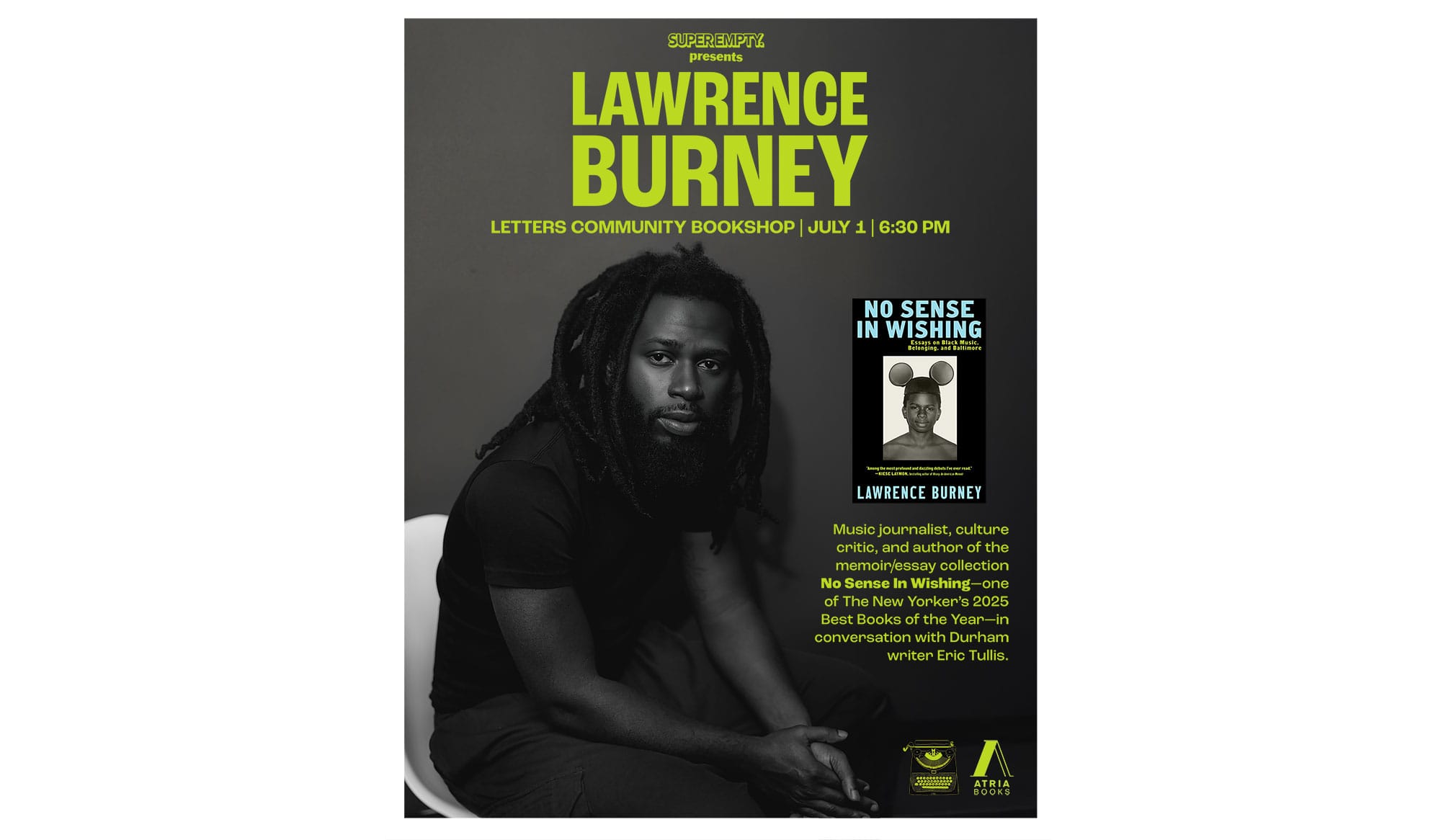
📆 Updates across the board on the The Calendar, including an event next week we're very proud to present: culture critic and music writer Lawrence Burney at Letters Community Bookshop, reading excerpts from his memoir No Sense In Wishing, plus a conversation with Eric Tullis. Tap here to RSVP and save yourself a seat, and here to learn more.
- Also, upcoming show listings ft. Cyanca, Michaelwhite, Kenny Mason, The Genius Party, SaziFest, Tab One, Bobby James & more
📻 New music and/or videos (click at least three):
- Rapsody - "God Gotta Afro" (YouTube)
- TiaCorine (ft. DJ Shadow, Run The Jewels, and Denzel Curry) - "Nobody Speak Part 2" (Apple)
- Freedom & Dallasito - Necessary Pressure (Apple)
- JADA x S14H - ZENITH (Apple)
- Nigel Malone - "Black History" (YouTube)
- MacDaBlackSheep - Your Dog Gon Tell You (Apple)
- Tracei - "pglt" (YouTube)
- Yahliq - "Stardust" (YouTube)
- James Vader & Mikey Wang Lavish - "Out The Trunk" (YouTube)
🔗 Assorted other links:
- Has your music been used to train AI? (The Atlantic)
- Brian Burns visits POOR DAD's Daily Bread release party (WUNC)
- A great interview with Durham artist Pierce Freelon about fatherhood, male role models, and his new album, Black Boy Glow (INDY)
