
The Hopscotch 2026 Lineup Is Here. Should You Be There?
What the longstanding Raleigh festival's latest lineup got right, what it got wrong, and whether it's worth the $129 price tag.

Editor's Note: The following article is not sponsored by Hopscotch Music Festival in any way. These thoughts, and my ultimate conclusions, are entirely my own.
It's hard out here for an indie-ish, semi-embattled, 15-plus-year institution of Triangle arts and culture.
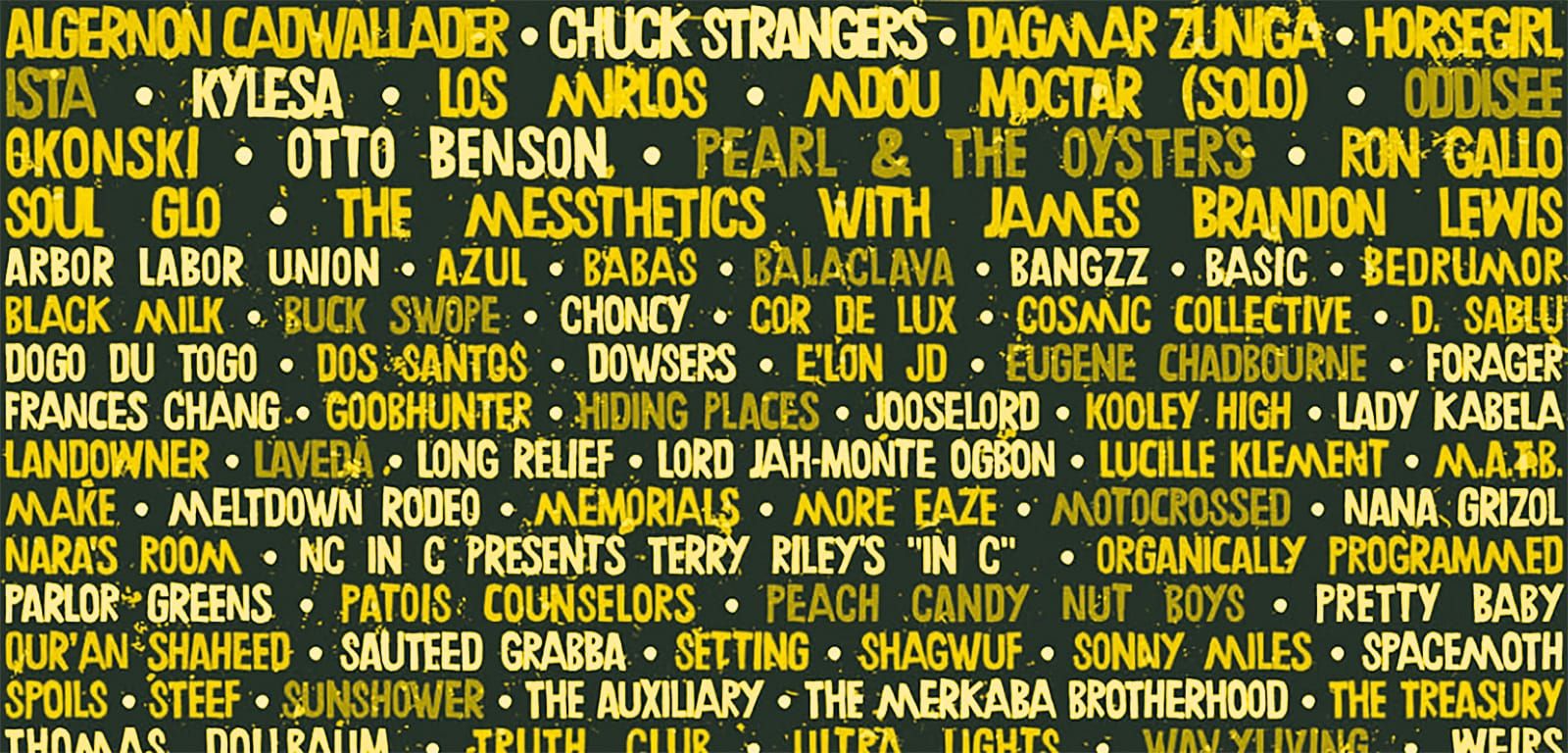
Last Friday, Hopscotch Music Festival finally provided what concerned and/or disgruntled fans have long been clamoring for, unveiling this year's full festival lineup on their Instagram page. And even bearing in mind that sneering disdain and merciless pile-ons are basically the lingua franca of social media, and should thus be taken with a grain of salt, the early returns were, well, not good.
"Well, you had a good run. Good luck to all bands," eulogized one commenter. "Never buying a ticket without seeing a lineup again," vowed another. A host of other remarks, seemingly at least a third of the post's 400+ comments—comprised of genre-specific complaints, critiques of parent company Etix, disapproval of the headliners—offered variations on the same theme. What might appear to an uninitiated onlooker as a shocking amount of venom over a single music festival lineup was, in reality, the product of numerous long-simmering dynamics all converging at the same time (some of which I covered in a SE piece last year). And as is often the case in such situations, the degree of vitriol probably went beyond what this lineup, assessed on the merits, actually deserved.
With that context in mind, and still plenty of notes to go around, these are my reactions to the 2026 Hopscotch lineup—with regards to hip-hop, and beyond—organized into a few simple categories for easy digestion.

Wrong: Less Money, Mo' Problems
In assessing the 2026 lineup—and its subsequent blowback—there's little point in starting anywhere besides money. One need only glance at past headliner offerings (for one example, 2018: Miguel, Nile Rodgers & Chic, The Flaming Lips, Grizzly Bear, Thundercat) to discern from the outside looking in that the budget this go-round, and even the past few years, is not the same as it's historically been. That feeling continues down-lineup as well, where there's no denying the dip in firepower compared to most Hopscotches of yore. (It also pervades the major stage setup as well. Recent years have seen Hop's outdoor venue capacity go progressively backwards, from Red Hat Amphitheatre and City Plaza, to City Plaza and Moore Square, to now just City Plaza.)
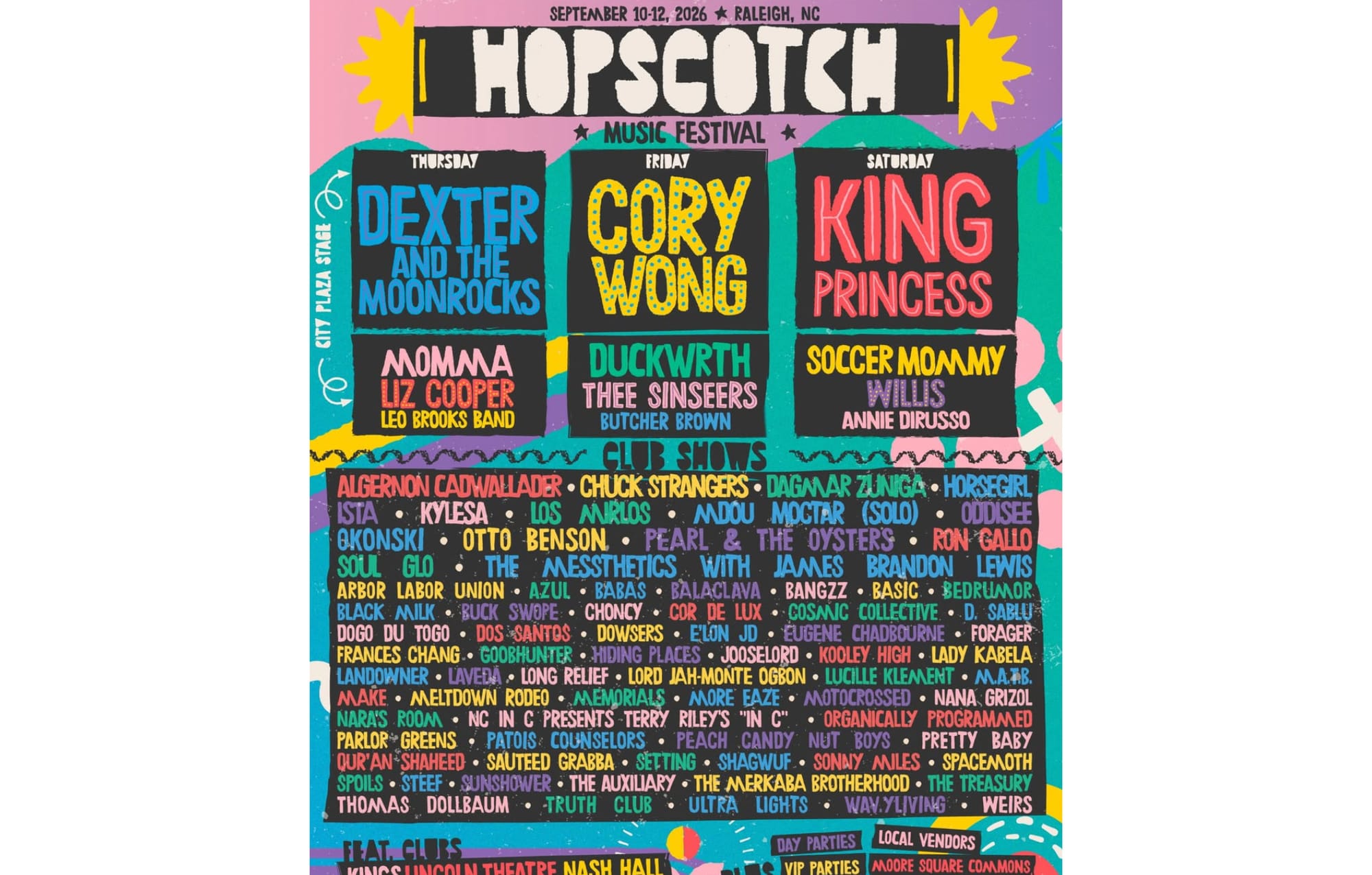
That doesn't mean the offerings are bad; in fact, there's a lot to love in the club shows in particular. (More on that later.) The same may be true for these headliners—I'm simply unfamiliar with most of them. But whereas I'm willing to approach a lineup like this with the curiosity of someone who writes about music and wants to fill gaps in my knowledge, most people justifiably expect big, recognizable names they've long wanted to see live. When it comes to the most vocal objections to Hopscotch '26, it seems fair to assume that the marquee names, and a general feeling of disinvestment festival-wide¹, carry an outsize share of the blame.
Assuming there is a smaller pool of financial resources to work with, it's hard to say, exactly, how Hopscotch could or should have navigated it any better². Scaling back the number of acts (or days), for example, isn't a great solution when sheer breadth, and discovery in general, is one of your major calling cards. Nevertheless, for many detractors I'm sure the answer is pretty basic: Etix should either find the money in its coffers to invest the dollars an operation like Hopscotch requires, or find a different ownership group who will.
Right: For Hip-Hop/R&B, A Better Effort Than '25
Last year was an undeniable disappointment for hip-hop at Hopscotch, the latest low in a noticeable trend of decline. No local (or even regional) act was on the 100-plus performer bill until Ace Henderson was added late, and just three other acts—Ghais Guevara, Cavalier, and Fatboi Sharif—rounded out the entirety of hip-hop club shows. A headlining set from a fresh-off-Live Laugh Love Earl Sweatshirt provided a degree of solace, but the overall picture left much to be desired.
In 2026, there's no high-wattage headliner, and the situation with out-of-town club shows remains largely the same: three slots, this time filled by Chuck Strangers, Black Milk and Oddisee. There's a welcome shift in homegrown acts, however, with Triangle stalwarts Jooselord and Kooley High, Raleigh abstract rapper/producer wav.yliving, and Charlotte's Lord Jah-Monte Ogbon all on the list. There's also clearly been more of an effort at incorporating R&B/soul—largely an afterthought last year, but this time represented by the likes of Duckwrth (playing the main stage on Friday night), The Sinseers, E'lon JD, and NC's own Sonny Miles. It's not exactly a sea change, but to be a step up from last year, it doesn't have to be. All eleven artists above are genuinely dope, and for many a hip-hop/R&B fan, that alone might be worth the price of admission.
 Ryan Cocca
Wrong: Still Not Taking Requests
Of the concerns mentioned in my Hopscotch essay last summer, two in particular remain woefully unaddressed by the festival a year later: the relative safeness and demographic signaling of the curation, and the lack of engagement with on-the-ground connectors who could assist in casting a wider net.
On the first point, as talented as the hip-hop slate is this year, there's an easy and obvious critique to be made of the bookings as well. Said politely: they represent expected, fairly narrow lanes within the wider context of the genre as a whole. Said more crudely: they appeal primarily to the aesthetic tastes of a mostly white, mostly older audience (I say this as a member of that audience). Against the backdrop of gentrification and displacement that's making urban centers like downtown Raleigh whiter every year, such choices can land less like innocuous oversights than as confirmation (even subconsciously) of who a city is really for, and who it is not.
Just from the Carolinas alone, artists like Trap Dickey, Trim, Fetty P. Franklin, Jass Clutch, Gauxstman, and leroy & Ducee' DropTop would all represent a more comprehensive overture to hip-hop fans broadly; on the "underground" side of things, acts such as TopOppGen, prettifun, thr33, and sosocamo would do the same. It's an especially strange omission given the departure (or at least hibernation) of Dreamville Festival, which in theory leaves a sizable hip-hop audience in the Raleigh area hungry for another major attraction to attend in its absence.
Unfortunately, the clearest path to combating these blind spots—intentional relationships with local tastemakers and promoters—is the other main feedback Hopscotch continues to ignore. Whether it be Sazi, AyeeeDubb, Raleighwood, Bryce Fitts, InThaFest, Outlaw Nation, The Genius Party, etc., countless resources exist to get more intimately connected with local hip-hop, performers and fans alike. Of the lineup critiques levied at Hopscotch over the past couple years, many have shouted out, or directly come from, these same people—proof that, by directly engaging them, a great deal of the public outcry would be avoided in the first place.
Right: Across Genre, Gems For Those Willing To Look
Per all of the above, Hopscotch is not perfect. And yet true to its mission³, it remains one of the most concentrated and eclectic weekends of music in the Southeast, a ripe tableau of interesting sounds both known and unknown (mostly the latter) to the average music fan. Combing through the club show listings, I found no shortage of acts outside of hip-hop I was excited to see: Nigerien guitarist Mdou Moctar, who I first saw last year on the cover of Durham-based Philm magazine; French-American duo Pearl & The Oysters, who I became a fan of years ago after hearing them on NC State student radio; jazz outfits Butcher Brown, and Parlor Greens; jazz-punk quartet The Messthetics. Others previously unbeknownst to me, like alt-folk artist Dagmar Zuniga and the country rock duo Babas (both from New York), are already in my rotation, and I've barely cracked the surface of the lineup as a whole.
As ever, Hopscotch remains a festival more for digging and discovery than die-hard fandom, with a lineup (and, to its credit, a price point) that reflects that. At $129, its three-day GA pass costs less than what many spend to see a single artist these days, and roughly a third of what Dreamville Fest two-day passes have historically been. The shortcomings are real, but they shouldn't cancel out the great value that, for many music fans, Hopscotch '26 still represents. As the now-ubiquitous saying goes, two things can be true at the same time—we can want better for the Triangle's last remaining major festival, and also enjoy it while it's still here. And that's exactly what I intend to do.
See y'all in Raleigh.
¹ Another small but telling point: Hopscotch, which like other festivals of its size has often made at least modest tweaks, if not wholesale changes, to its visual identity from year to year, is now on the third or fourth straight year of essentially the same exact look.
² Though multiple rounds of hyping up, including a post dedicated to announcing the forthcoming announcement, probably didn't help.
³ I'm purely assuming here, as there is no actual "Mission" published for Hopscotch online, just as there is no About section, no Staff/Team/Leadership page, and so on. Like I said, not perfect.

Ryan Cocca is the founder/editor of Super Empty and a decade-plus veteran of regional culture coverage in North Carolina, whose work has appeared in INDY Week, Pigeons & Planes, and more. He (I) can be reached at ryan@superempty.com.