
What Happened to Hip-Hop at Hopscotch?
The latest Hopscotch lineup is a sign that the genre isn’t being taken seriously by the festival — or by the Triangle region as a whole.

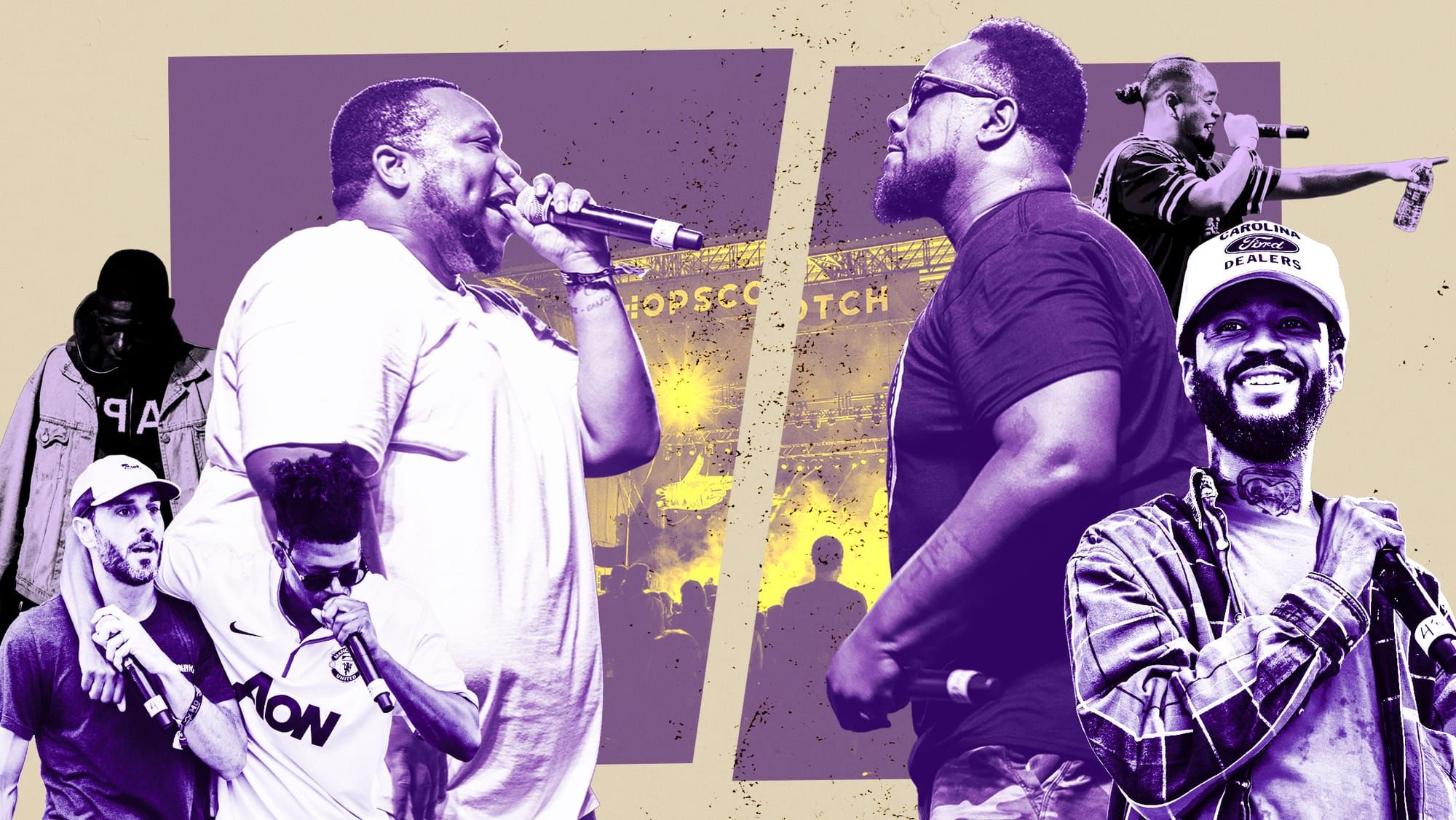
Few people know the magical, chance encounters made possible by the genre-blending DNA of Raleigh’s Hopscotch Music Festival better than Charlotte rapper leroy.
In 2014, he performed — then under the name WELL$ — in a small, upstairs venue (he doesn’t remember the name) where two audience members of note took an interest in his mix of snarling stage presence and withering writing. They were Nick Sanborn and Amelia Meath, whose self-titled debut as electropop duo Sylvan Esso had been released earlier that year to nationwide critical acclaim. The three began collaborating, eventually leading to the 2017 WELL$ song “Young Man,” co-produced by Sanborn and featuring vocals from Meath. It remains his most popular song to date, with more than 4 million streams on Spotify alone.
“I don’t get the Sylvan Esso song without doing Hopscotch,” he emphasizes.
That Hopscotch would catalyze such a partnership is hardly a surprise. For much of its 14-year lifespan, the playground-like, “hop-skip-jump” ethos for which the event is named has spoken not only to Hopscotch's close-proximity venues that ranged from outdoor mega-stages to cramped, sweaty dives, but also to a laudable diversity of genres. Year after year, irrespective of personal taste, one could reliably skim the poster and find sets to get excited about — from folk-Americana to hardcore to industrial techno, and more. But it was a healthy dose of hip-hop that made the festival a late-summer staple of the regional rap community’s calendar.
“It felt like a weekend with your cousins,” says leroy, who’s been to the festival multiple times since the night he met Sylvan Esso. “It felt like a homecoming.”
Anderson .Paak performing at Hopscotch, 2016.
A scan of lineups over the years illustrates what he means, starting with the inaugural 2010 edition, when the lineup boasted Raekwon, 9th Wonder, Big Remo, Skyzoo, Kooley High, K-Hill, KAZE, The Away Team — and Public Enemy as headliner. In 2014, Durham rap duo Toon & The Real Laww opened for De La Soul on the City Plaza main stage, while an impressive slate of indie rappers from North Carolina and beyond filled out the club shows: Deniro Farrar, Joe Scudda, Open Mike Eagle, Madison Jay. And in 2019, a newly reunited Little Brother joined Lute, and Kooley High on the City Plaza stage, buttressed by an embarrassment of riches on the undercard: Earthgang, Joey Purp, Injury Reserve, Matt Martians, and Triangle natives Jooselord and pat junior.
In other words, for most of its existence, Hopscotch, despite being more of an indie/alternative festival than anything else, earned a reputation for treating hip-hop with genuine curatorial care and judgment. The genre felt like a core artistic pillar of the festival’s brand, rather than some exotic adornment sprinkled on top. That curatorial sensibility has been a cultural boon to the area, no doubt — and as such, warrants a certain degree of goodwill and benefit of the doubt.
In recent years, however, questions have emerged in the community over whether that commitment is still as strong as it once was. So, when the 2025 lineup arrived earlier this month with Earl Sweatshirt as the lone hip-hop headliner, followed up by just a few smaller rap acts below, the volume of those questions grew louder than ever before.
“Y’all allergic to hip-hop?” asked the Raleigh-based DJ and producer Aaron Kahlil in the comments of the announcement post. “One hip-hop artist, though?” replied Durham rapper .zone (the actual number is four). Another artist, Raleigh rapper and InThaFest founder Noahh, could muster only the backhanded encouragement: “Maybe y’all will get it right one day.”
The most thoroughly articulated rebuke, however, came from that 2014 Hopscotch alumnus himself, leroy, who posted a lengthy statement to his account. It read, in part:
“It’s been hard not to notice how each year seems to feature fewer and fewer artists (and audiences) that look like me… Hip-hop isn’t just a genre; it’s a global cultural force, a local voice, and historically, a key part of your festival’s identity. The recent underrepresentation doesn’t just feel like an oversight; it feels like a step backwards.” (He has not gotten any outreach from the festival in response to his message.)

In the days that followed, similar sentiments flowed freely in texts, calls, and private group chats. Some voiced frustrations about the lineup and growing exasperation at the festival specifically, while others called out the steadily gentrifying culture of Raleigh (one local artist likened it to the phenomenon of urban basketball courts being converted for tennis and pickleball). Arguably more important than the specific critiques being made were the people making them: these were not disgruntled hangers-on or fly-by-night clout chasers; rather, they were the exact kind of long-tenured artists and creative organizers with whom the festival should aspire to have its strongest relationships.

For those intent upon viewing the hip-hop shortcomings of Hopscotch ‘25 as part of a larger pattern at the festival rather than an easily forgiven one-off, supporting evidence is not hard to find.
Back in 2021, Hopscotch performer and Raleigh up-and-comer lesthegenius told INDY Week that while he was excited for the opportunity, he didn’t think hip-hop was “as equally represented” as it had been in years past. Considering the maelstrom of COVID complications that organizers had to navigate that year to make even a severely stripped-down lineup possible, few conclusions should probably be drawn from that lineup alone. But the installments since have provided scant reassurance, with some undeniably strong bookings — les, Boldy James, Mavi (twice), Lord Jah-Monte Ogbon, Cyanca — nevertheless making up a smaller part of the total bill than ever before.
Not only has the share of acts one would consider “hip-hop” (or adjacent, including R&B) fallen relative to the rest of the lineup overall, but those who do make the bill have felt increasingly packaged together on just certain stages or days of the weekend, and less integrated into the program — in direct contrast with the convergent, blender-like days of Hopscotch yore.
Across 12 outdoor stage sets over the past two years, only two have featured hip-hop/R&B artists (Day 1 in Moore Square Park, 2024; Day 2 in City Plaza, 2023), and the only City Plaza set of the past few years was Denzel Curry, Digable Planets, and Winston-Salem native TiaCorine in 2023. For the next-most recent occurrence of rap on the main stage, you’d have to go back to before the pandemic, six years ago. Not quite what you’d expect from a festival that once booked The Roots, Big Boi, and De La Soul as headliners across three consecutive years. (Due to an injury, Big Boi was replaced by A-Trak before the festival took place.)
Considering the Triangle’s surging growth over the past decade and an increasing fatigue for the exclusionary and culturally appropriative dynamics that so often accompany it, some in the scene view this all as a classic case of gentrification — an intentional or at least passive shift from a genuinely diverse community gathering into something optimized for wealthier (and often whiter) crowds. Or as leroy describes it, “purposely excluding the things that Black people typically like.”
Jooselord, really the only hip-hop mainstay on the bill in recent years, sees negligence rather than a willful or cynical divestment in hip-hop and Black art generally.
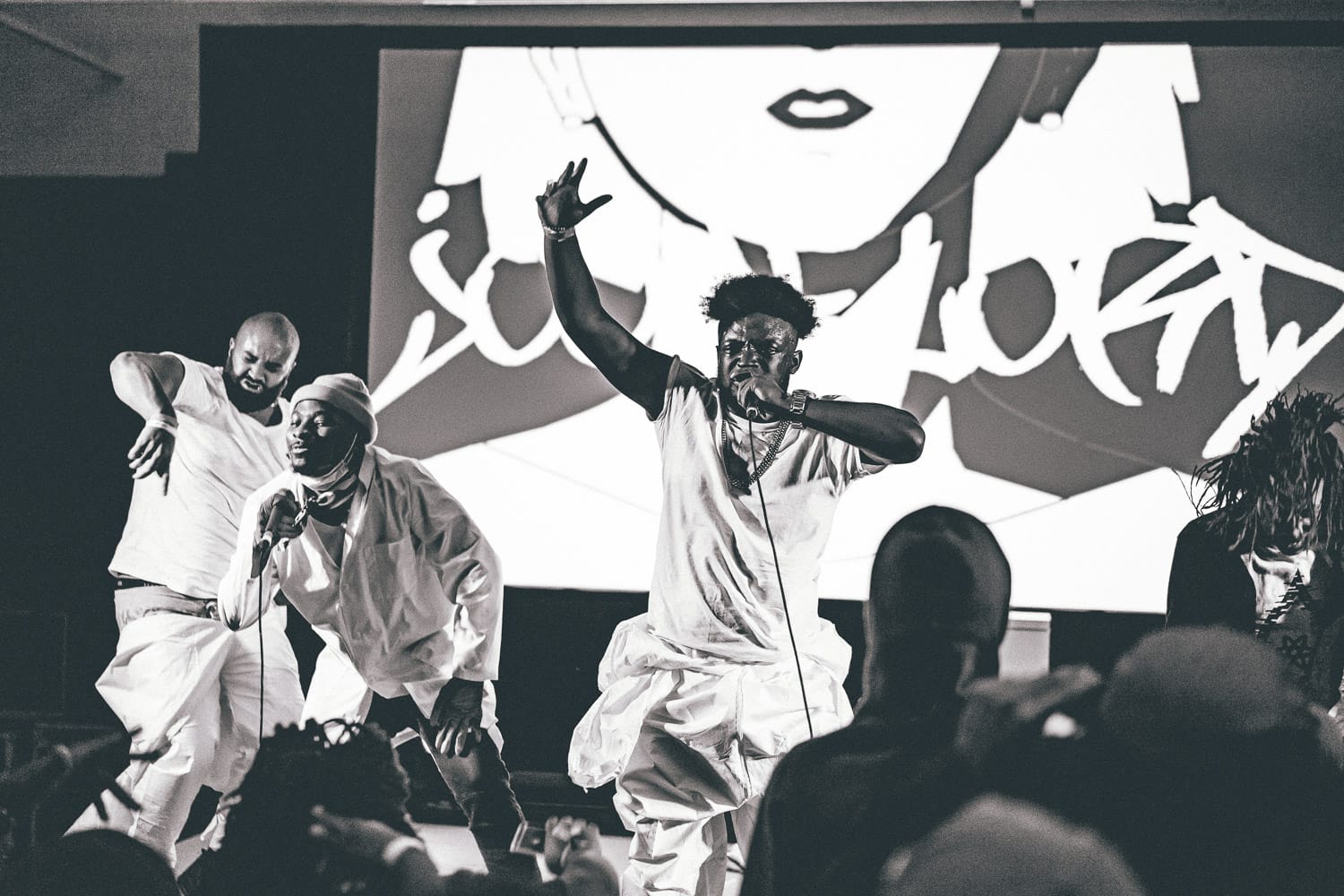
“People who don’t know them, or haven’t been around them, yeah, it looks like that,” he says. “I think it’s [just] a lack of thoughtfulness… they not trying to push no agenda or nothing like that.”
It’s emblematic of the depth of local hip-hop’s trust issues with Hopscotch that even as the Durham rapper dispels some of the harshest assessments of the festival one moment, he’s making his own critiques the next — specifically that years of consistently putting on raucous, crowd-favorite shows have failed to move himself and others past a certain ceiling of opportunity.
“Multiple years, my show was packed to the brink at Hopscotch, and not once have I been called to be on the first announcement,” he says. “I've always been a second thought.”
The sense that hip-hop doesn’t get the consideration it deserves is only exacerbated by a seeming lack of contact and familiarity between event organizers and the artists, promoters, and cultural curators of the genre in the Triangle. When I talked to five different major connectors within the 919 hip-hop scene for this story, four had never been asked to work (in any capacity) with Hopscotch, and the one who had told me they did so through a third party and did not have relationships with festival organizers directly.
Making a more concerted investment in those relationships is worth doing for the obvious reason that it would yield a better, more proportional share of hip-hop options on the lineup. But the most salient benefit to Hopscotch — which only has so much stage time to offer artists — would likely have to do with those who aren’t on the poster: Artists and managers would be better able to accept not being selected because they know what Hopscotch is looking for, and why. Instead, with few lines of communication to lean on and little clarity to be found, head-scratching and idle speculation reign supreme.
“I could say it's the pandemic. It could be a difference in budget. I don't know what it is,” says Joose.
“But what I do know is they are not putting in effort on the hip-hop side.”

Much of the blame for the hip-hop and Hopscotch disconnect rests with the festival itself. But to stop there would risk coming away with an incomplete view of the situation, and an inadequate understanding of how we arrived here in the first place.
Raleigh, which has incidentally hosted one of the world's biggest hip-hop festivals over the past seven years, is a good place to start. The state capital is a lovely city, but it could hardly be considered a place where hip-hop is wholeheartedly embraced as an engine of culture. In 2021, when a group of young artists and promoters put on a well-attended, all-day music festival in Moore Square Park (the inaugural InThaFest event “Summer In Tha Carolinas”), it seemed that a new, next-generation staple of the local cultural calendar had arrived. But by the time Noahh & Co. sought to re-book the park the following year, the city had decided Moore Square would no longer host ticketed events — with Hopscotch being the lone exception.
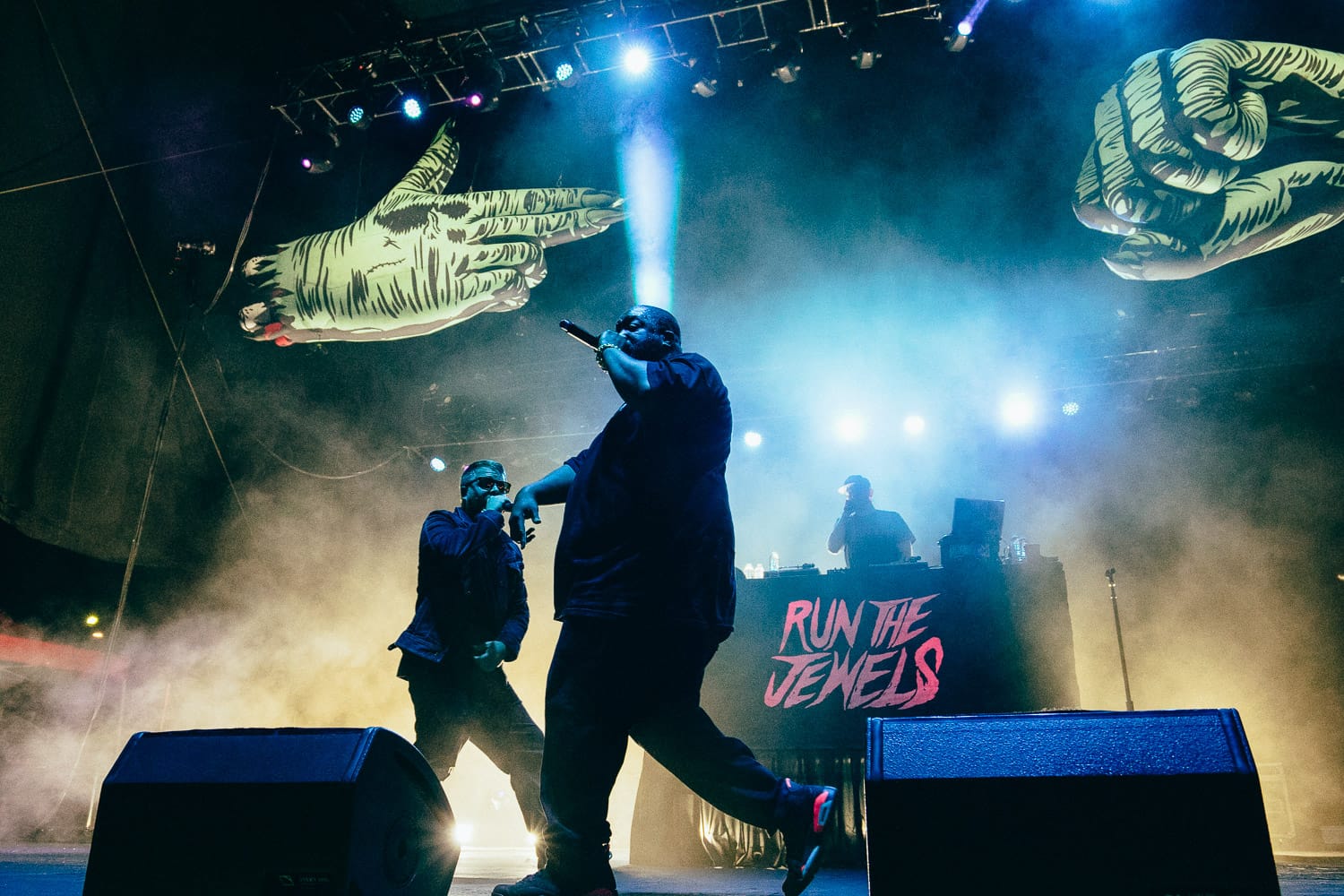
Since that auspicious debut, InThaFest has yet to host another outdoor affair in downtown Raleigh. They’ve decamped instead for lower-cost, indoor venues like Transfer Co. Ballroom and, more recently, The Portal HQ on Hillsborough Street, venues where they are more able to operate freely, but less likely to be interwoven with the fabric of everyday life.
Speaking of the city’s aforementioned blockbuster hip-hop festival, Dreamville — does anyone believe the city ever figured out how to fully parlay the blowout event into a beneficial platform for more than a few, select regional artists? Setting aside the legitimately dope community pop-out that was Lute’s perennial Goldmouf Garage block party, the general consensus seems to be no. For years, any conversation about Dreamville with a Triangle hip-hop act has been likely to elicit consternation and resigned criticisms not much different from those expressed about Hopscotch, suggesting issues that are endemic to the city, not just the festivals themselves.
To the extent that Raleigh doesn’t yet feel like a place where hip-hop is a deeply ingrained and ubiquitous force in public life, a lack of vision or support from civic and cultural leaders only explains so much. There’s also a responsibility on the part of fans, friends, and community members to come out to the events that are happening: Show up and show that they have value.
A couple of months ago, a talent booker at a popular Raleigh venue told me that while the live music industry as a whole was still coming back to life, hip-hop’s return had been slower than others. His assessment jived with what I’d experienced anecdotally, going out to shows the past couple of years and often leaving with the unshakable sense that getting 100 people in the building for a local rap show in the Triangle is far more difficult today than it was in 2016 or 2017. With the principle of supply and demand in mind, peruse the calendars of area venues and compare the number of hip-hop shows to those with names like OOPS… I PARTIED AGAIN: A BRITNEY SPEARS 2000s BASH.
For more evidence, consider Moogfest and Art of Cool — touchstones of a frothy time when it seemed certain that the Triangle’s startup, music festival, and hip-hop cultures all were heading to the moon. Neither festival exists today, and the lone hip-hop holdout from that period, Beats N Bars, was a markedly smaller event last year than its corporate-sponsor-studded iterations prior to COVID. To be clear, the disappearance of major festivals from a region is hardly a bulletproof indicator of depressed enthusiasm for its local music scene. But it isn’t an encouraging sign either.
Beyond the specific dynamics at play within the Triangle, one way to make sense of these shifts is to see them as a reflection of the broader national zeitgeist. As cited in a recent Instagram post from the music blog Off Record Sounds, a recent week (June 14th) of the Billboard Hot 100 featured just 14 rap/hip-hop songs, compared to 47 (!) the same week seven years prior. Even for someone who lived it, that 2018 list is almost hard to believe — practically every other song, and nearly the entire top 20, is rap or R&B.
Which begs the question: Were the most hip-hop-heavy editions of Hopscotch based on a philosophical commitment to the genre, or merely a curatorial byproduct of a mid-to-late 2010s in which it dominated seemingly every aspect of American life? If so, the recent lineups decried by the local rap scene may simply be viewed internally as a culturally fluid and temporary shift, as opposed to a larger crisis of the genre at Hopscotch. Or, it could be as simple as top-level changes in personnel: festival cofounder and rap advocate (and former rapper himself) Greg Lowenhagen, who led the curation for Hopscotch’s first seven years, departed in 2016. I emailed the festival for comment on curatorial decisions, but no one responded.

Will hip-hop find its way back to being a more integral part of Raleigh’s cherished, 15-year-running music festival? That will largely be dictated by whether Hopscotch seriously wants it to or not.
But other actors will have a role to play as well: Raleigh can demonstrate itself to be a more hospitable locale for hip-hop, one that champions more than just a safe, narrow subsection of the genre (and pulls in on-the-ground curatorial leaders like Chubbz, Artist, Sazi, AyeeeDubb, Alec Lomami, Noahh and more to do so); local fans can show up to events throughout the year and eliminate “low draw” from festival curators’ arsenal of excuses. In fact, there’s a golden opportunity for city and fans alike to do just that on August 30, when the DIY, artist-curated Raleighwood Fest presents its second installment, featuring many of the best independent hip-hop, R&B, and soul acts in the whole state.
In the meantime, one hopes that Hopscotch is listening and will do its part to work the genre more prominently back into its programming. Despite the frustrations, it’s obvious that for most in the community, the emotional connection to the festival forged long ago still endures.
“I love Hopscotch. I stop everything for Hopscotch,” says Joose. “I like the way Raleigh changes and just feels different… Whether I’m playing or not, I’m out there.”
With a few intentional changes and some help from its neighbors, Hopscotch can make sure the rest of us are too.

Ryan Cocca is the founder/editor of Super Empty, a former furniture entrepreneur, and a guy who is definitely putting effort into the hip-hop side. He (I) can be reached at ryan@superempty.com.